
Sustainability at SCHLAADT
All good things come in threes.
Every year we publish a Sustainability Report. It covers ecological, social, and economic topics and discloses our greenhouse gas emissions by Scope 1, 2, and 3. Since the 2025 reporting year, the Schlaadt Group has also been part of the consolidated sustainability report of our parent company, palero, prepared in accordance with the European Sustainability Reporting Standards (ESRS). In 2025, our total emissions amounted to 37,163 t CO₂e. The increase compared to the previous year is mainly attributable to corrected emission factors and the first-time inclusion of our US site. Our reduction targets through 2030 can be found in the report.


Our Fields of Action

Economic Sustainability
Product Protection
Production Costs
Transport Costs
Circular Economy

Social Sustainability
Product Protection / Hygiene
Employer Brand:
– Fair Pay
– Career Opportunities
– Respect
– Recognition
Ecological Sustainability
Environmental and Species Protection
Climate Protection
Energy
Conserving Resources
Circular Economy
What EPS molded parts can do – and where their limits lie
EPS molded parts consist of around 98% air. They protect products at low weight and can be recycled as a single-type material. At the same time, EPS is a plastic based predominantly on fossil raw materials, and not every recovery route is available for every quantity and every application. On this page, we show both. You can find the key figures in our 2025 Sustainability Report.
How we recycle EPS as a material – and where the limits lie
EPS can be collected as a single-type material and recycled accordingly. Which route is suitable depends on cleanliness, quantity, and the intended application. In 2025, we doubled the amount of recyclate used in our EPS block production. Together with trading partners, we also collected and materially recycled around 80 tonnes of post-consumer EPS.

GRINDING AND MIXING
- Limited mechanical properties
- Bulk density not freely variable
- Limited availability
- Not usable in the food sector

REGRANULATION (MELTING)
In this process, used EPS molded parts are melted using an extruder and processed into PS raw material. This process also offers the possibility of subsequent gassing. This results in EPS (Styrofoam) raw material again, which can be processed conventionally using pre-expanders and molding machines.
- PS/EPS raw material
- Better mechanical properties than ground material
- Freely selectable bulk densities
- Not usable in the food sector

ENERGY RECOVERY
Where material recovery is not possible, for example in the case of heavily contaminated EPS, energy recovery in waste incineration plants remains an option. While this is not recycling in the sense of the European waste hierarchy, it is a controlled recovery option: the energy released flows, for instance, into district heating networks. The fossil fuels replaced in this process are not counted towards the CO₂ footprint of our production.
- Fallback option when material recycling is not possible
- Energy flows into district heating, for example
- Not recycling in the sense of the waste hierarchy

Application in the Brick Industry
Ground EPS is added to the raw brick mass as a pore-forming agent. During firing, the EPS particles decompose. The resulting voids improve the brick’s insulating effect. The EPS itself is not preserved in this process: it is recovered, but not kept in the material cycle.
- Use in construction
- Improved insulation through voids
- No material cycle
Chemical recycling – a process under development
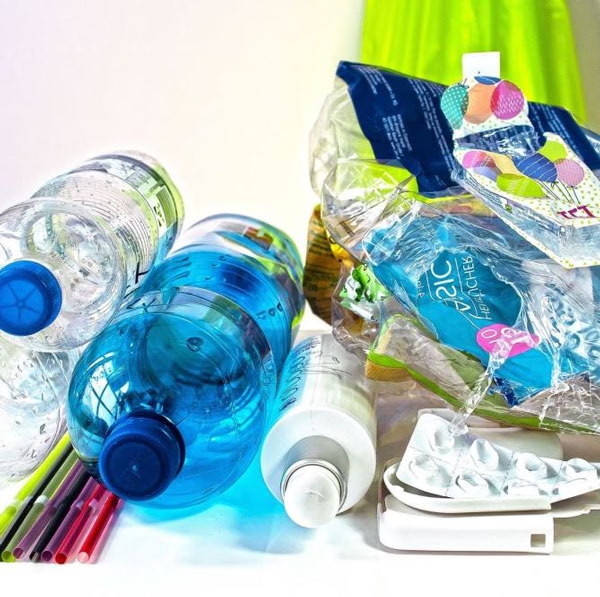
In chemical recycling, mixed plastic waste is converted into pyrolysis oil by means of pyrolysis. This oil replaces fossil raw materials at the beginning of the value chain. This produces EPS granulate with the properties of virgin material. Initial plants are in operation; the quantities available are currently limited.
- Mechanical properties like virgin material
- Freely Selectable Bulk Density
- Availability currently limited
Biomass Balance Styropor®
- With Biomass Balance Styropor®, the raw material manufacturer uses renewable raw materials at the start of the production chain, such as plant waste, vegetable oils, or biogas, instead of fossil raw materials.
- These quantities are allocated to the product through a mass balance process. The delivered material does not contain any measurable proportion of renewable raw materials.
- The remaining manufacturing process is identical to that of conventional EPS. Mechanical and thermal properties are therefore indistinguishable.


