The versatile foam for insulation and a variety of packaging solutions.
Expanded polystyrene, better known as EPS foam or Styropor®, is one of the most versatile plastics of our time. With an impressive composition of 98 percent air and only two percent polystyrene, this lightweight rigid foam combines exceptional properties that make it indispensable in both the construction and packaging sectors. From the efficient thermal insulation of modern buildings to the protection of sensitive electronics and devices – EPS insulation materials and packaging solutions made from expanded polystyrene (=EPS) shape our daily lives more than most people realize.

What is EPS foam?
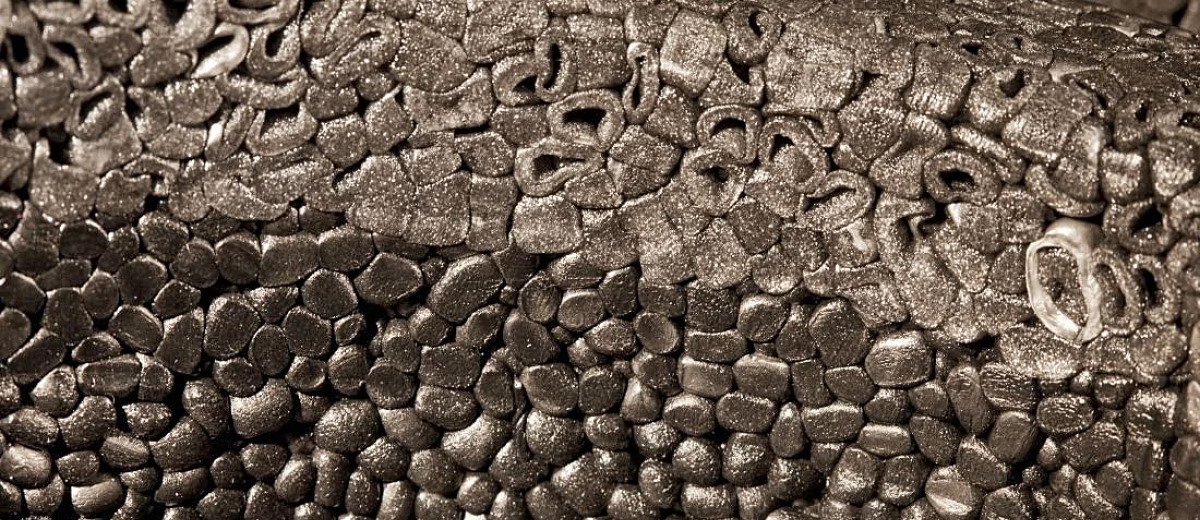
EPS, the abbreviation for expanded polystyrene (Styropor®, Airpop®), is a closed-cell rigid foam characterized by its exceptionally low weight compared to its excellent insulation and cushioning properties. These remarkable properties result from its unique cell structure, where countless microscopic air chambers permeate the material. The density of EPS typically ranges between 10 kg/m³ and 35 kg/m³ (= 10 g/l to 35 g/l), enabling various applications.
+49 6726 – 803 – 136
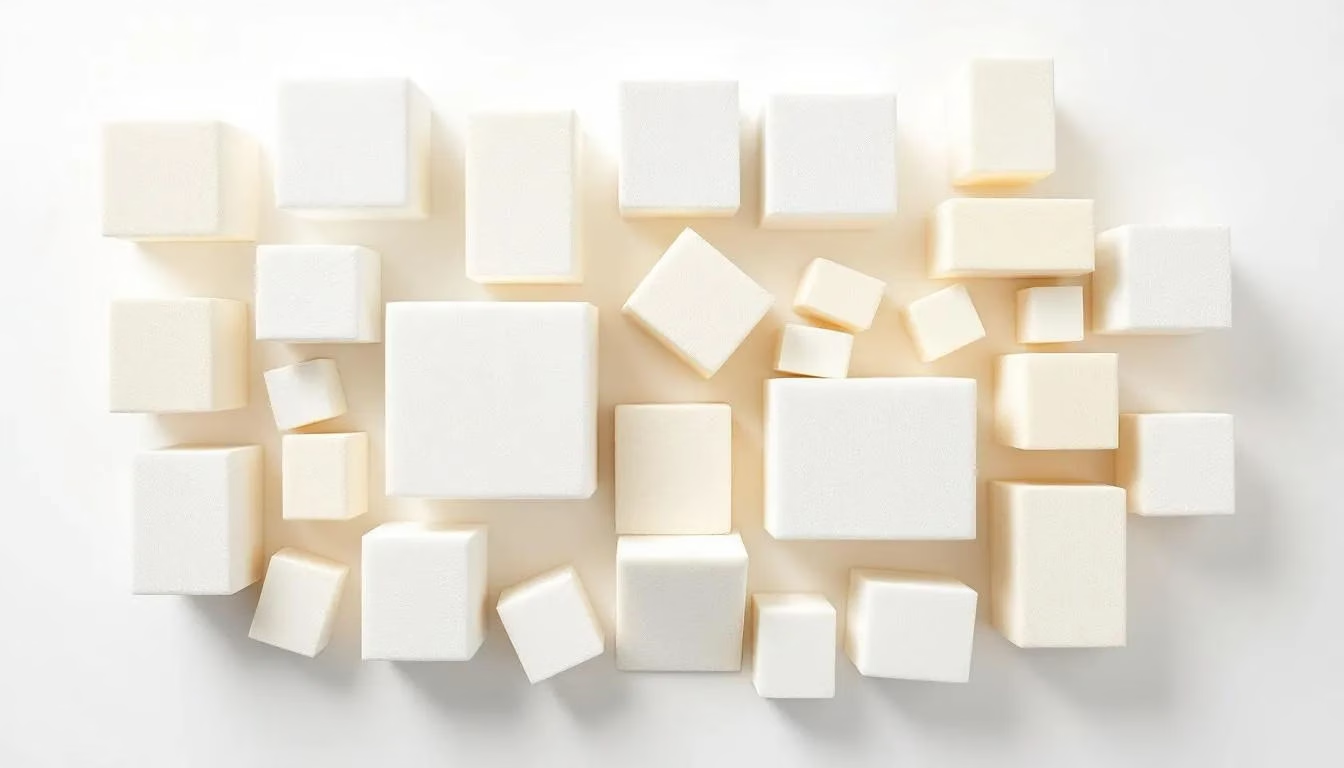
The foam is characteristically white and is sold under various trade names. While Styropor® is a registered trademark of BASF SE, the term Airpop® has been established since 2014 as an industry-wide designation for expanded polystyrene. This variety of names reflects the material’s widespread use and acceptance in various applications.
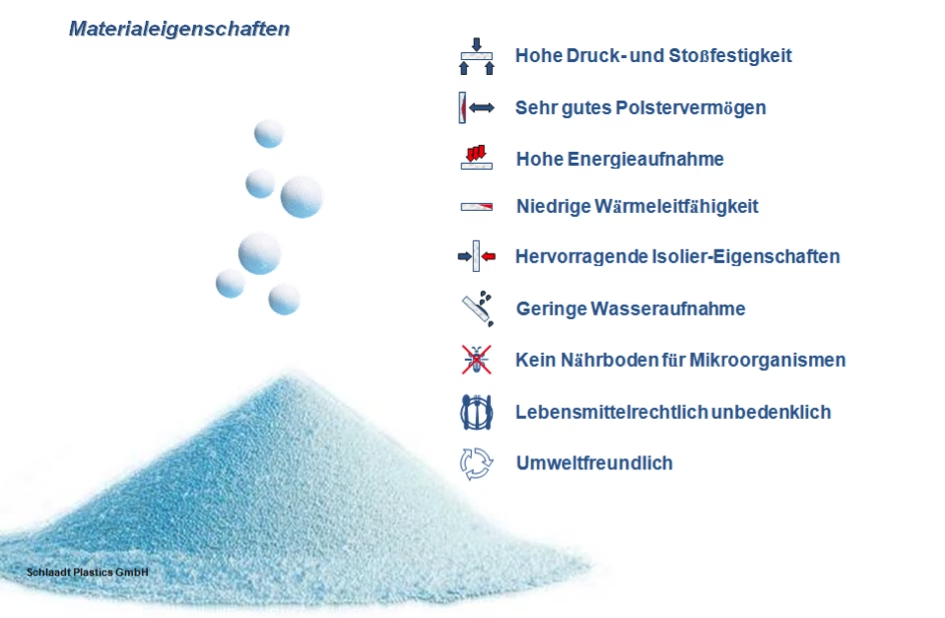
The closed-cell structure gives EPS rigid foam its outstanding properties: excellent thermal insulation, low water absorption, and high mechanical stability at minimal weight. These material properties make EPS a material with virtually no limits in its application. Furthermore, EPS can be easily cut, milled, or molded into almost any shape, which further increases its versatility.
Types of Polystyrene Foams
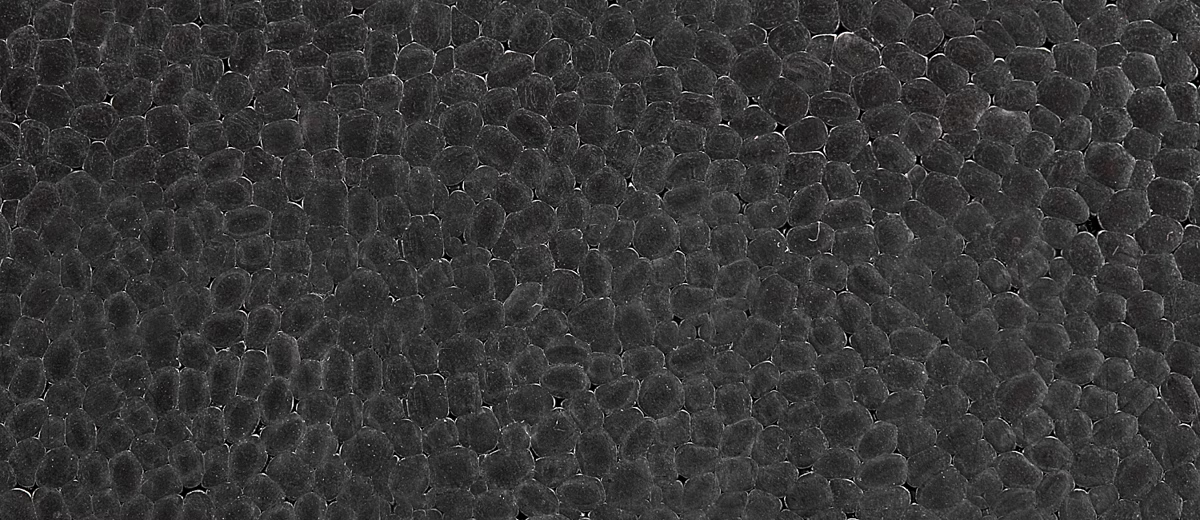
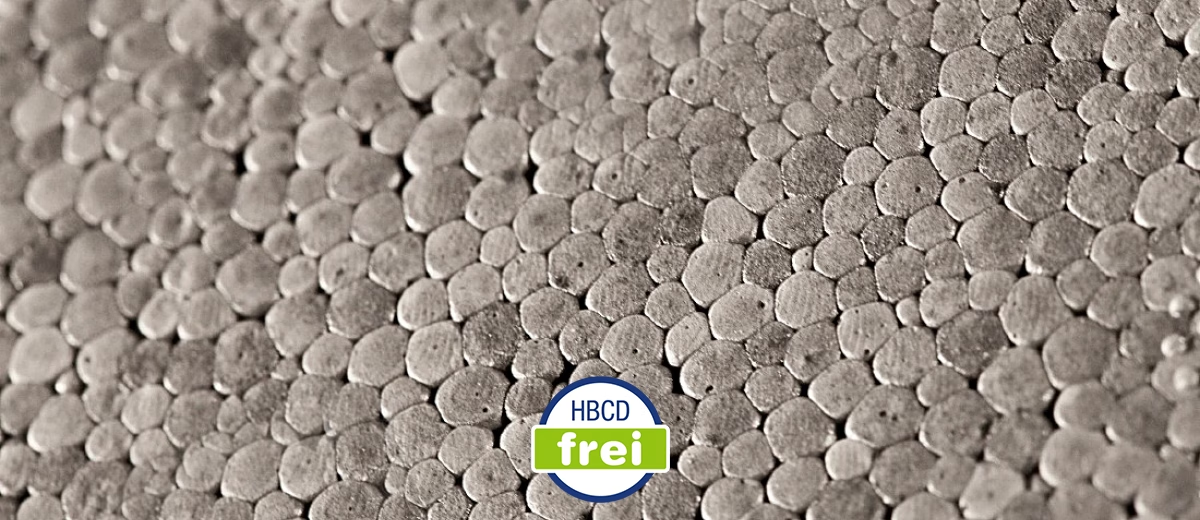
The market for polystyrene-based foams offers various types, each optimized for specific applications. Classic EPS (=Styropor®) is produced by steam-foaming polystyrene granules, which creates the characteristic bead structure.
XPS (Extruded Polystyrene – Polystyrene Rigid Foam) differs from EPS due to its homogeneous, closed-cell structure and offers higher compressive strength. While EPS is created by foaming individual beads, XPS is extruded in a continuous process, resulting in denser and stronger boards.
EPP (Expanded Polypropylene) is based on a different polymer (polypropylene) and exhibits special resilience and temperature resistance. This property makes EPP particularly valuable for applications that must withstand repeated stress or extreme temperatures – hence its particular value in reusable applications.
A remarkable innovation is Neopor® – a graphite-modified EPS with significantly improved insulation performance. The embedded graphite particles reflect thermal radiation and reduce thermal conductivity by up to 20 percent compared to standard EPS.
| Foam Type | Density (kg/m³) | Thermal Conductivity (W/mK) | Special Properties |
|---|---|---|---|
| Standard EPS | 15-30 | 0.035-0.040 | Cost-effective, versatile |
| Neopor® | 15-30 | 0.031-0.033 | Improved insulation |
| XPS | 25-45 | 0.029-0.036 | High compressive strength |
| EPP | 20-200 | 0.039-0.045 | Impact-resistant, temperature-stable |
Production of (Styropor®) EPS or Airpop®

The production of EPS begins with polystyrene granules, which are already mixed with the blowing agent pentane during polymerization. This hydrocarbon-based blowing agent enables a subsequent volume expansion of 20 to 50 times the original volume.
During polymerization into solid beads, expandable polystyrene acquires gas inclusions that are crucial for subsequent expansion. The first production step is pre-foaming, where the granules are heated with steam to approximately 100 °C.
During this process, the individual polystyrene beads expand and form the characteristic EPS beads. Subsequent intermediate storage takes place for 6 to 48 hours to allow the bead structure to stabilize.
The final molding occurs at 110 to 120 °C, where the pre-foamed beads fuse together under steam exposure. This process can be precisely controlled depending on the desired density and application.
For EPS cut-to-size parts, the resulting large blocks with a volume of around 5 m³ are then subjected to comprehensive quality control and subsequently cut to size according to customer requirements.
Modern processing also enables the production of customized molded parts directly from an article-specific tool, which is particularly relevant for complex packaging or system components. This approach significantly minimizes waste and optimizes material utilization.
Foam insulation with EPS
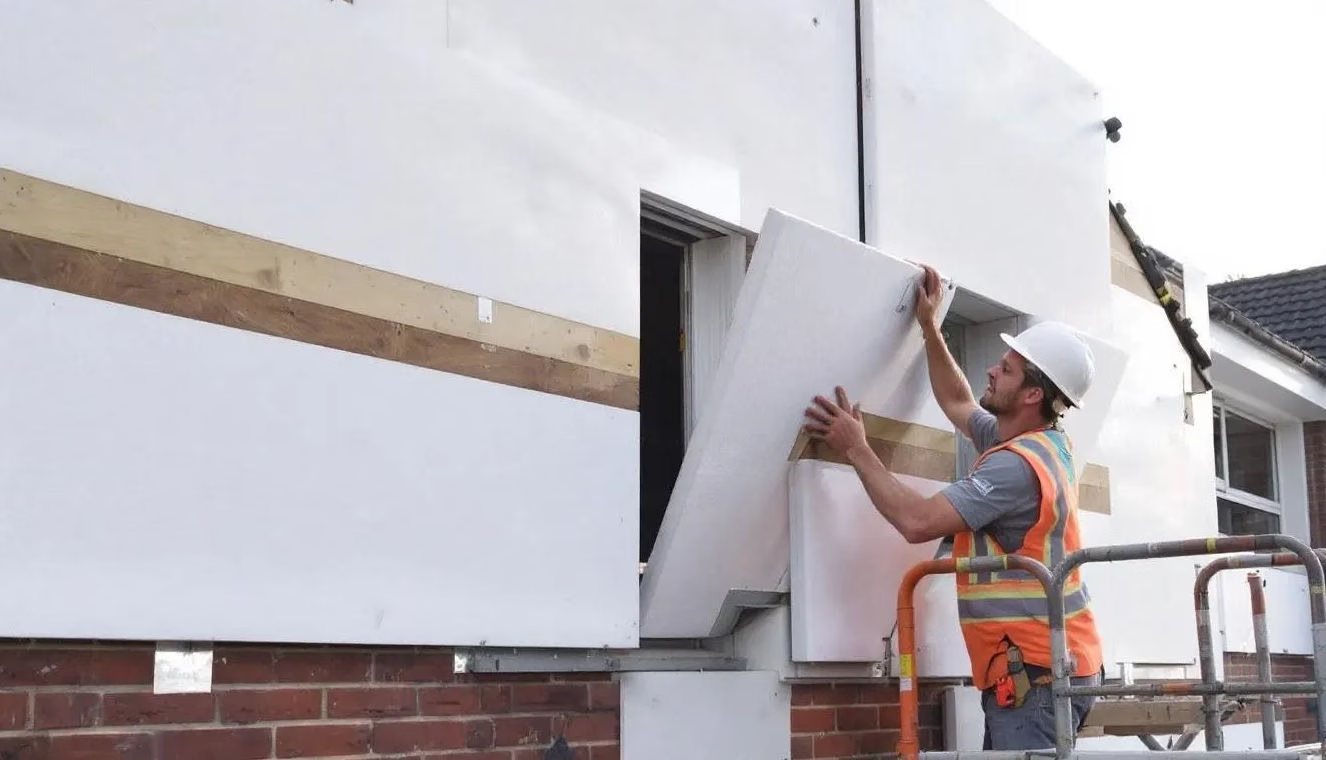
In the construction sector, EPS has established itself as one of the most important insulation materials for energy-efficient buildings. With a thermal conductivity of λ = 0.032 to 0.040 W/(mK), depending on density, expanded polystyrene offers excellent insulation properties while being an economical solution.
EPS insulation materials are typically used in ceiling, wall, floor, and roof areas to ensure optimal energy efficiency. External thermal insulation composite systems (ETICS) use EPS insulation boards as a core component for facade insulation.
The insulation boards are glued directly to the exterior wall and finished with a reinforcing mesh and top coat. This technique enables energy savings of up to 30 percent in old building renovations.
Perimeter insulation for foundations and basement floors requires particularly pressure-resistant EPS grades. Here, insulation material variants with increased density are used, which can permanently absorb earth pressure without deformation.
In civil engineering, EPS foam is also used for weight reduction, which minimizes the load on the subsoil. Furthermore, for these perimeter insulations (=insulation of earth-contacting building components) for frost protection, water absorption is significantly reduced.
Density categories kg/m³ for insulation
The classification of EPS by density enables the optimum selection for specific applications:
- SL density (13.5 kg/m³): Lightweight insulation boards for standard applications in interior insulation
- M density (19 kg/m³): Medium strength, ideal for facade insulation in ETICS
- H density (24 kg/m³): High compressive strength for perimeter insulation and green roofs
- VH density (28+ kg/m³): Maximum load capacity for industrial applications and traffic areas
Fire protection classes according to EN 13501-1 are achieved by EPS products through the addition of flame retardants. Standard EPS achieves class E, while treated variants can meet classes B1 or B2. The use of appropriate flame retardants significantly expands the use in safety-critical areas.
+49 6726 – 803 – 136
Protective packaging made of EPS
The packaging sector utilizes the shock-absorbing properties of EPS for the protection of sensitive goods. Customized molded parts have become indispensable, especially in the electronics and device industries. Shaping in the cut-to-size area is done by CNC machining or hot-wire cutting, allowing even the most complex geometries to be precisely realized. For larger quantities, production using a mold as a molded part has proven ideal.
Antistatic EPS variants protect electronic components from electrostatic discharges. These special formulations contain conductive additives that dissipate static charges in a controlled manner.
Test standards such as ASTM D1596 define the required shock-absorbing properties for various product categories.
Reusable packaging systems made of EPS are becoming increasingly important in industry. These system packages enable hundreds of usage cycles and significantly reduce both costs and environmental impact. The high dimensional stability and resistance to mechanical stress make EPS ideal for such applications.
Individual shaping based on 3D data of the product to be protected optimizes both protection and material usage. Modern CAD software enables the simulation of impact loads and the resulting optimization of foam geometry.
Thermal Packaging for Food
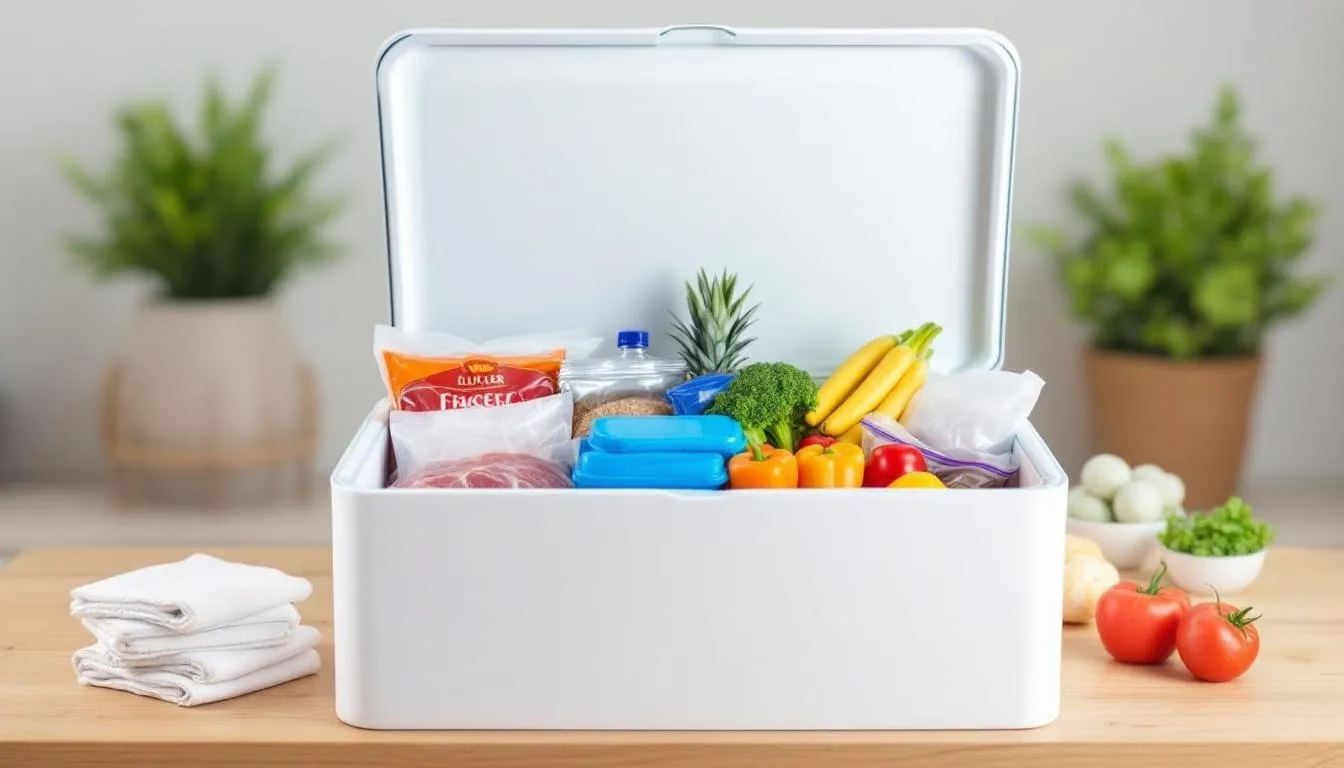
The temperature stability of EPS from -40 °C to +70 °C makes it the ideal packaging material for temperature-sensitive goods. Insulated boxes for frozen and fresh products utilize the low thermal conductivity for effective temperature control over 24 to 72 hours.
Food-grade certification in accordance with EU Regulation 1935/2004 confirms the safety of EPS in direct contact with food. This certification is a fundamental prerequisite for use in food logistics and online food retail.
Pharmaceutical logistics places particularly high demands on temperature management. Vaccines and biological preparations require unbroken cold chains, which are ensured by high-quality EPS packaging with integrated temperature loggers. The combination with gel cool packs or dry ice extends the cooling time to several days.
The recycling of thermal packaging takes place via dual systems or special take-back programs offered by manufacturers. Many companies implement closed-loop systems, where packaging is collected, cleaned, and reused after use.
Logistics packaging made of EPS / Airpop®
In modern logistics, EPS revolutionizes traditional packaging concepts through extreme weight savings. Pallet interlayers made of EPS sheets weigh up to 90 percent less than comparable solutions made of wood or cardboard, enabling significant cost savings in transport.
Edge protection and corner protection made of EPS protect goods from mechanical damage during transport and storage. The adaptable shaping allows for optimal protection even with irregular product geometries. As an alternative to conventional air cushions, EPS filling material offers better damping properties with less volume.
Stackable system packaging for the automotive industry demonstrates the efficiency of EPS in closed supply chains. These products circulate between suppliers and manufacturers, significantly reducing both packaging costs and waste.
The integration of RFID technology into EPS packaging enables seamless tracking and optimizes warehouse management. Modern logistics concepts use this digitized packaging for just-in-time deliveries directly to production lines.
Sustainable foam packaging

The sustainability of EPS is based on its complete recyclability through both mechanical and chemical processes. Cradle-to-Cradle certifications confirm its suitability for a closed-loop circular economy, where used material is fully converted into new products. The first raw materials in the EPS sector with a recycled content of up to 30% are now already available!
Bio-based EPS alternatives from renewable raw materials are under development, but are not yet ready for the market for all applications. The reduced CO₂ footprint through local production and short transport routes significantly improves the environmental balance.
Reusable concepts for industrial packaging demonstrate the potential for sustainable packaging solutions. A single EPS molded part can go through hundreds of use cycles before being sent for recycling. EPR-compliant solutions (Extended Producer Responsibility) integrate manufacturer responsibility for the entire product lifecycle.
The development of fully degradable alternatives to EPS remains a technical challenge, as the combination of properties such as light weight, cushioning, and temperature resistance is difficult to replace. Nevertheless, manufacturers are increasingly investing in research for more environmentally friendly alternatives.
Recycling of Foams – Expanded Polystyrene EPS
The recycling of EPS is carried out via two main processes: mechanical and chemical recycling. In the mechanical process, EPS waste is shredded and processed into granules, which are used for new products. The recycling rate in Germany reaches 45 percent material and 55 percent energy recovery.
Chemical recycling decomposes polystyrene back into its raw materials, theoretically enabling infinite recycling. Innovative solvent-based processes can even process heavily contaminated EPS waste and regenerate it to virgin material quality.
EPS Waste: Recycling Processes in Detail
Volume reduction by a factor of 50 through compaction or dissolution makes the transport of EPS waste economical. Collection systems such as Poly-Styrene-Loop or Rigk take-back organize the logistics for EPS waste from construction and packaging. The EU’s Circular Economy goal foresees a recycling rate of 65 percent by 2030, which requires further investment in collection and processing.
In energy recovery, EPS achieves a calorific value of 40 MJ/kg and can replace fossil fuels in industrial plants. This approach contributes to the reduction of CO₂ emissions, even though material recycling takes priority.
System components for polystyrene packaging solutions

Modern packaging solutions integrate EPS into complex system components that go beyond mere protective function. Modular EPS systems adapt to various product sizes and significantly reduce the number of required packaging variants.
Automated removal and handling devices work with specially developed EPS molded parts. These systems enable fully automated packaging processes with minimal manual intervention. RFID integration for tracking and traceability transforms EPS packaging into intelligent system components.
Temperature loggers integrated into EPS packaging monitor the cold chain without gaps. This data enables quality assurance and proof of liability for temperature-sensitive goods. Hybrid solutions combine EPS with cardboard or other plastics for optimized functionality.
Software for packaging optimization calculates optimal EPS geometries based on product data and transport requirements. These tools reduce material consumption and improve protective effect through computer-aided simulation of transport loads.
Customized packaging solutions made of Styrofoam
The development of customer-specific EPS packaging begins with CAD design, based on exact product specifications. Prototyping through 3D milling and hot wire cutting enables rapid iterations and optimizations before series production.
Drop tests and vibration tests according to ISTA standards validate the protective effect under real transport conditions. These standardized procedures ensure that EPS packaging meets the requirements of different shipping methods.
Industry-specific Styropor® Solutions
The automotive industry uses EPS and EPP for battery housings, airbag modules, and sensitive electronics. Just-in-time delivery directly to production lines requires maximum reliability and precision from packaging solutions.
In medical technology, packaging made of EPS enables the protection of implants and surgical instruments. GDP-compliant temperature control in the pharmaceutical industry places special demands on material quality and documentation.
Electronics packaging requires ESD protection and antistatic properties to protect sensitive components from damage. Mechanical engineering benefits from vibration damping through EPS packaging during the shipment of heavy equipment.
The future of EPS foam lies in the further development of sustainable solutions while maintaining its outstanding material properties. From thermal insulation in buildings to the protective packaging of sensitive goods, expanded polystyrene (Styropor®) remains an indispensable material that meets the demands of a sustainable economy through continuous innovation. The combination of technical excellence, cost-effectiveness, and increasing environmental compatibility positions EPS as a key material for the circular economy of the future.
+49 6726 – 803 – 136